How fast can disaster relief sanitation get set up in Columbia?
When the power's out and water's not running, waiting isn't an option. Columbia Porta Pros keeps standard units, handwashing stations, and portable sinks staged for quick dispatch across Columbia, and we've moved trucks out to Forest Acres, 6.9 miles west, and Dentsville, 8.8 miles northwest, on short notice after storm response calls. Same-day delivery is the goal for active emergencies, priced closer to our day rate than a weekly one. A roll-off dumpster often goes out on the same trip, since storm debris and flood-damaged material need to leave the site fast under OSHA 1926.25 housekeeping guidance for clearing work areas of scrap and debris.
If the site has no power, a light tower and temporary power pole usually ride along too, especially for overnight shelter operations or crews working past dark. We also bring temporary fencing when a damaged structure needs to be cordoned off, since OSHA 1926.202 calls for barricades that meet ANSI D6.1 wherever the public could wander into a hazard. For a shelter housing displaced residents, we'll typically pair standard units with at least one ADA accessible unit, since ADA Standards section 213.2 requires at least one accessible unit in any cluster, and never less than 5 percent of the total.
What sanitation equipment works best for shelters and staging areas?
A shelter running for days needs more than toilets. It needs handwashing, holding capacity and a way to keep pace with more people than a job site ever sees. We size shelters using the same logic as OSHA 1926.51(c): 1 toilet for 20 workers or fewer, scaling up from there, though a shelter population swings hour to hour in ways a job site doesn't, so we usually round up. Handwashing stations need soap and towels, not just sanitizer, since 29 CFR 1910.141(d)(2) specifically excludes hand sanitizer as a substitute for washing facilities. That matters more in a shelter than almost anywhere, with illness spreading fast in close quarters.
For sites without sewer access at all, a holding tank rental or restroom trailer covers the gap. Our restroom trailers range from a 2 stall unit for a small staging area up to an 8 stall trailer for a larger shelter population, and a shower trailer is worth adding if displacement stretches past a few days. If a septic system on-site has failed or backed up from flooding, emergency septic service can pump and stabilize a tank the same day, and a residential tank in normal use gets pumped every 3 to 5 years depending on tank size and household size, a baseline worth knowing once the system is back on a normal schedule.
Where does disaster relief equipment get placed and does Columbia require a permit?
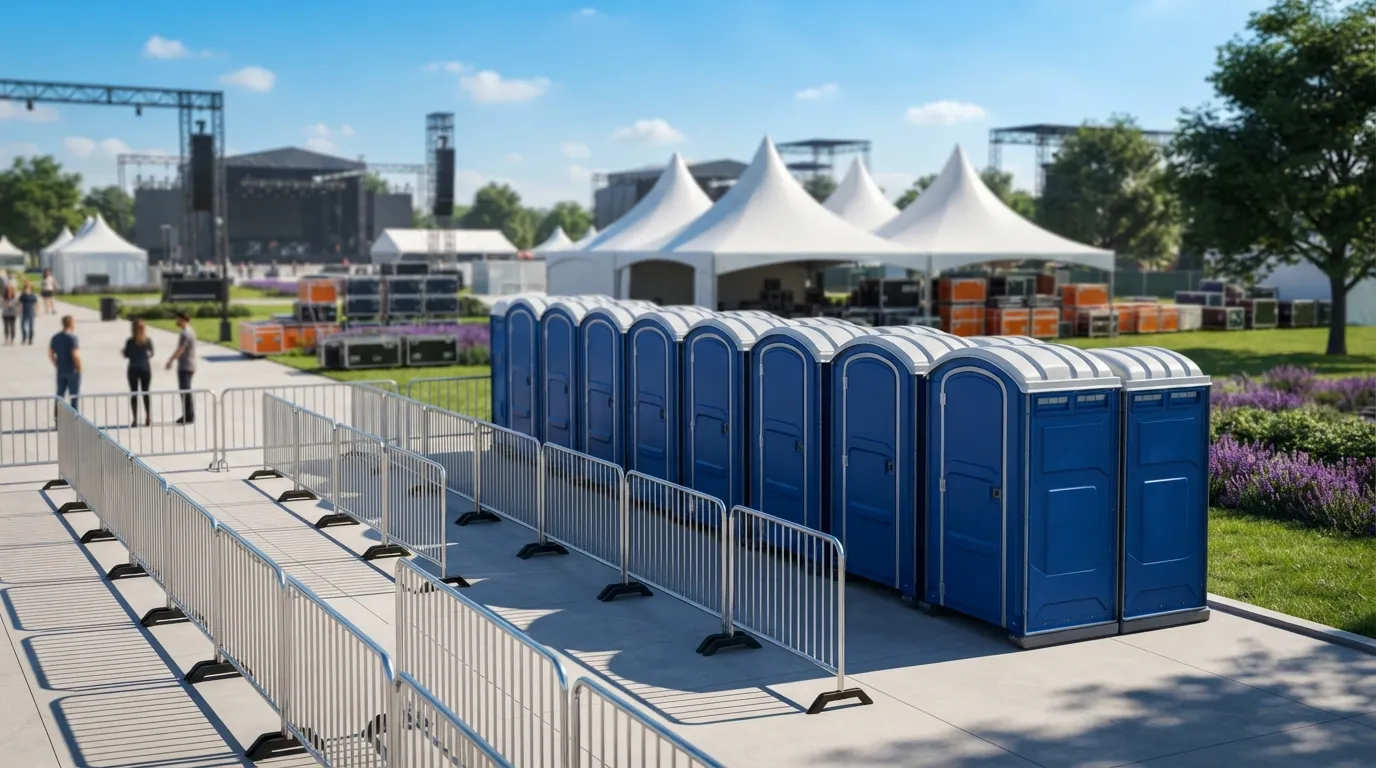
Placement matters as much as equipment count. Units need to sit on stable, slip-resistant ground per ADA Standards section 302.1, with a 60 inch turning circle nearby per ADA Standards section 304.3.1 if anyone in the shelter uses a wheelchair. That's not always easy on storm-damaged ground, so our crews scout the pad before dropping anything. Our porta potty placement guide covers the ground rules we use even in a rush.
Permit placement in the public right of way during an emergency has not been verified with the City of Columbia for this page, so confirm directly with the city if units or a dumpster will sit on a street or sidewalk during response. Our dumpster permit requirements and porta potty permit requirements pages walk through the general permitting process, but disaster conditions can change what's normally required, so a phone call to the city first saves a headache later. Storage is often part of the response too. A storage container or mobile office trailer gives responders a dry place to keep supplies, and a 20ft container is usually enough for a single staging point. West Columbia, 14.1 miles west, and Cayce, 17.0 miles southwest, fall inside our normal response radius as well.
How quickly can you deliver during an active emergency?
Same-day delivery is standard for disaster response when trucks are available, often within a few hours of the call. We prioritize shelters, medical staging and public safety sites first. Call Columbia Porta Pros directly or use request a quote and flag it as emergency response so dispatch moves it to the top of the queue.
Do you provide handwashing stations separate from toilets during disaster response?
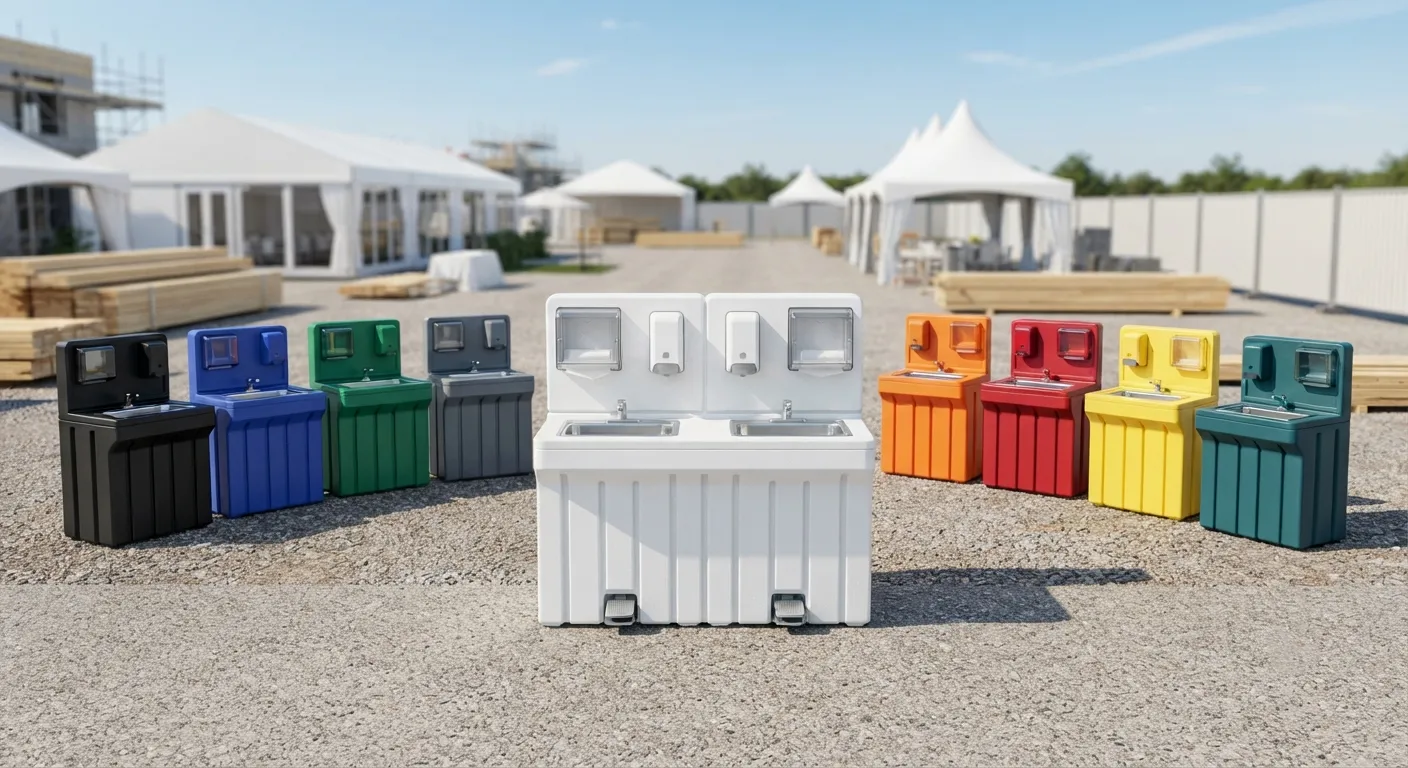
Yes. Handwashing station rental and portable sink rental units go out independently of toilets, which matters in shelters and feeding sites where handwashing volume outpaces toilet need. Soap and towels come standard, per 29 CFR 1910.141(d)(2); sanitizer alone doesn't meet that standard.
Can you supply restrooms for a shelter with no working plumbing?
Yes. A holding tank system or restroom trailer works entirely off-grid, no sewer or water hookup needed. We match unit count to shelter population using OSHA 1926.51(c) ratios as a baseline, then adjust for how the population actually moves through the day.
What if our septic system failed from flooding?
Emergency septic service can pump a flooded or backed-up tank same day in most cases. A typical residential tank is pumped every 3 to 5 years under normal conditions, but flood intrusion changes that timeline and often requires immediate pumping regardless of the last service date.
Do you serve areas outside Columbia during regional disasters?
Yes. We've dispatched to Forest Acres, Woodfield, Dentsville, West Columbia, Cayce and Lexington for storm response. Distance affects delivery timing more than pricing; a site 20 miles out still gets served, just later in the dispatch order than one inside Columbia.
Next step
Get a delivery date
Tell us the address, the dates and the headcount. We size the order and confirm the route.